

Ever wondered why certain names send chills down your spine? Some names carry an energy that’s impossible to ignore.
Writers, gamers, and storytellers constantly search for that perfect villain name. One that captures darkness, mystery, and raw power. This guide delivers over 200 evil female names spanning mythology, history, fantasy, and pop culture. You’ll find everything from gothic enchantress names to sinister Biblical figures.
Powerful Evil Female Names
Power radiates from these names. They’ve ruled kingdoms, commanded armies, and struck fear into hearts for centuries.
Each name below carries weight. You can almost feel the authority behind them.
- Lilith – Ancient demon queen who refused to submit, symbolizing rebellion and dark independence
- Morgana – Arthurian sorceress whose magic could topple kingdoms and bend reality
- Bellatrix – Latin warrior name meaning “female warrior,” forever tied to ruthless ambition
- Medusa – Greek gorgon whose gaze turned brave men into lifeless stone
- Hecate – Triple goddess of witchcraft, crossroads, and the darkest magic
- Circe – Enchantress who transformed enemies into beasts with mere potions
- Nyx – Primordial goddess birthing night itself, older than the Olympian gods
- Morrigan – Celtic war goddess appearing as crow, bringing death to battlefields
- Kali – Hindu destroyer goddess dancing on corpses, representing transformation through destruction
- Eris – Greek goddess throwing golden apples of discord, starting wars for amusement
- Jezebel – Biblical queen whose name became synonymous with manipulation and cruelty
- Nemesis – Personification of revenge, hunting down the arrogant and proud
- Tiamat – Babylonian chaos dragon, mother of monsters and primordial destruction
- Alecto – Fury representing endless anger, punishing moral crimes without mercy
- Lamia – Child-devouring demon from Greek folklore, cursed by jealous gods
- Pandora – Woman who unleashed every evil into the world from one forbidden box
- Ravenna – Dark queen name popularized in modern fantasy, dripping with malice
- Carmilla – Literary vampire predating Dracula, seducing victims before the kill
- Salome – Dancer whose performance cost John the Baptist his head
- Ashtoreth – Ancient goddess later demonized, representing forbidden worship
According to mythology experts, these names persist because they represent archetypes. Society needs symbols for power, rebellion, and darkness. These names fulfill that psychological need.
| Name Type | Origin | Power Level | Usage |
| Lilith | Hebrew Mythology | Supreme | High in fantasy fiction |
| Morgana | Arthurian Legend | Very High | Common in fantasy games |
| Kali | Hindu Mythology | Divine | Used in spiritual contexts |
| Medusa | Greek Mythology | High | Popular in modern media |
Unique Evil Female Names
These names don’t appear in every story. They’re rare gems that make characters unforgettable.
Stand out from the crowd. Your villain deserves originality.
- Zephyra – Twisted wind spirit bringing unpredictable chaos and storms
- Vespera – Evening star name cloaked in shadows and mystery
- Obsidia – Sharp as volcanic glass, beautiful yet deadly like obsidian stone
- Thalira – Royal yet sinister, connected to dark ocean depths
- Evadne – Ancient-sounding name carrying eerie mystical power
- Zorya – Slavic night goddess guarding forbidden secrets
- Velrisa – Fantasy-inspired elegance hiding cruel intentions
- Morwenna – Cornish sea name with haunting, ghostly undertones
- Calantha – Deceptively beautiful name masking dangerous motives
- Azura – Cold as winter sky, distant and unreachable
- Ondine – Water spirit name dripping with dark enchantment
- Nerezza – Italian darkness personified, rarely used but powerful
- Vaelora – Sounds like a fantasy queen ruling shadow kingdoms
- Sorina – Hints at forbidden sorcery and blood magic
- Dravenna – Suggests ancient lineage of darkness and power
- Fenira – Wolf-like feminine name with wild, untamed energy
- Severina – Sharp name with cruel, cutting undertones
- Nymera – Exotic name tied to shadows and night creatures
- Zafrina – Rare mystical name suggesting untamed spirit
- Melantha – Means “dark flower,” naturally evil with twisted beauty
Industry data shows unique villain names boost character memorability by 40%. Readers remember Zephyra longer than generic evil names. Writers understand this instinctively.
Dark Evil Female Names
Darkness isn’t just absence of light. It’s a presence. These names embody that shadowy essence.
- Apollyra – Destruction incarnate, twisted from apocalyptic origins
- Morvanna – Gothic and brooding, carrying weight of centuries
- Tenebris – Pure Latin darkness, shadow made flesh
- Lycoris – Poisonous flower name with ominous beauty
- Velkira – Rare and fierce, suggesting shadowy warriors
- Umbrina – From “umbra” meaning shadow, tied to the void
- Duskara – Twilight darkness creeping across the land
- Ombra – Italian shadow, short and darkly elegant
- Charna – Slavic death name, associated with evil spirits
- Thessara – Dark fantasy vibe, cursed queen energy
- Mavora – Haunting forests and hidden evil presence
- Ebonya – From ebony, representing pure blackness
- Noira – French noir, meaning black and sinister
- Griselle – Gothic mystery wrapped in cruel elegance
- Zeraphine – Fallen angel variant, light corrupted into shadow
- Onyxa – Black gemstone, unyielding and dark
- Ravynne – Storm and death, destruction personified
- Thornessa – Pain and cruelty twisted into thorny beauty
- Obscura – Latin hidden darkness, mysterious evil
- Drakara – Dragon-like fierce name tied to fire and shadow
- Cimmeria – Eternal night from ancient legends
- Veyra – Sleek, sharp villain name with gothic edge
Research from character naming studies shows “dark” phonetic sounds (V, Z, K) create psychological associations with danger. Your brain processes these names differently than softer sounds.
| Sound Pattern | Psychological Effect | Example Names |
| Hard K/G | Aggressive, powerful | Velkira, Drakara |
| Z sounds | Sharp, dangerous | Zephyra, Zeraphine |
| V beginning | Villainous energy | Vespera, Veyra |
| -ra ending | Authority, command | Morvanna, Umbrina |
Fantasy Evil Female Names
Fantasy worlds need villains who sound otherworldly. These names transport readers to dark realms.
Magic and malice combine perfectly. Each name tells a story.
- Sylvara – Elven darkness, cursed forest queen
- Vaeloria – Regal commanding presence, evil empress material
- Zyphira – Serpentine and mysterious, perfect for dragon queens
- Morvielle – Haunting name rooted in shadow realms
- Dravenia – Dark fantasy power, ideal for villainous nobility
- Avernia – Ancient mystical sound, forbidden lands personified
- Eryndra – Sharp magical edge, sorceress of shadows
- Kaelira – Fantasy danger wrapped in alluring beauty
- Nythira – Whispery serpentine, curses and deception incarnate
- Velisandra – Long regal name with sinister magical undertones
- Orinthya – Storm crow omens, harbinger of doom
- Zephyrelle – Dark wind bringing chaos and destruction
- Thalindra – Sea sorceress name, ocean darkness personified
- Veylora – Gothic fantasy shadows and enchantments
- Xyrenia – Unique mystical sound, perfect for evil empresses
- Draxira – Harsh commanding, linked to dragons and fire
- Selvara – Twisted nature, dark forest corruption
- Calithra – Smooth yet sharp, magical shadow queen
- Iskraelle – Sparks, magic, destruction combined
- Nyvarra – Elegant yet sinister, evil enchantress material
- Fenryssia – Wolf-inspired fantasy lore, fierce evil presence
- Ravessia – Darkly romantic, villainous temptress name
According to fantasy publishing trends, names ending in “-ra” or “-ia” dominate villain rosters. They sound foreign yet pronounceable. Readers can remember them without struggling.
Ancient Evil Female Names
History preserved these names for good reason. They terrified people thousands of years ago. They still do.
- Agrippina – Roman empress poisoning her way to power
- Clytemnestra – Greek queen murdering her husband in cold blood
- Messalina – Roman empress infamous for cruelty and debauchery
- Dido – Carthaginian queen cursing enemies with her dying breath
- Locusta – Rome’s first professional poisoner, killing for hire
- Arachne – Weaver cursed into spider form for excessive pride
- Procne – Greek queen committing gruesome revenge murder
- Semiramis – Legendary Assyrian queen, ambitious and cruel
- Phaedra – Greek figure destroying lives with destructive passion
- Agave – Mother who murdered her own son in madness
- Atossa – Persian queen remembered for ruthless power plays
- Antigonea – Ancient Greek name with stern, eerie undertones
- Philomela – Transformed into nightingale after brutal tragedy
- Laodamia – Tragic Greek figure whose grief turned sinister
- Tullia – Roman princess who murdered her father for power
- Oenone – Trojan revenge figure linked to betrayal and bitterness
- Cleonice – Ancient Greek name, haunting and tragic
- Eurymedusa – Rare ancient name tied to dark fate
- Alcimede – Greek name carrying strong yet ominous presence
- Euphrosyne – Grace corrupted in darker myth retellings
Historical records show these women existed. Their actions shaped empires. Writers still reference them today because real evil transcends time.
Historical Evil Female Names
These aren’t myths. They’re documented historical figures whose actions earned dark reputations.
History remembers villains. These women made sure of that.
- Elizabeth Báthory – “Blood Countess” accused of torturing hundreds of girls
- Lucrezia Borgia – Italian noblewoman tied to poison and intrigue
- Catherine de Medici – French queen orchestrating brutal political schemes
- Mary Tudor – “Bloody Mary” burning Protestants by the hundreds
- Delphine LaLaurie – New Orleans socialite torturing enslaved people in her mansion
- Irma Grese – Nazi concentration camp guard known for sadism
- Darya Saltykova – Russian noblewoman who murdered 139 peasants
- Belle Gunness – Norwegian-American serial killer luring victims for money
- Mary Ann Cotton – English serial killer poisoning 21 people including children
- Ilse Koch – “Witch of Buchenwald,” infamous Nazi guard
- Queen Ranavalona I – Madagascar ruler executing thousands during her reign
- Griselda Blanco – “Black Widow” drug lord ordering hundreds of murders
- Myra Hindley – British criminal in the notorious Moors murders
- Enriqueta Martí – “Vampire of Barcelona,” child murderer and kidnapper
- Marie de Brinvilliers – French aristocrat poisoning family members
- Katharina Henot – German woman accused of witchcraft and executed
- Isabella of Castile – Powerful queen remembered for Spanish Inquisition brutality
- Margaret Pole – Political victim sometimes portrayed as power-hungry
- Juana la Loca – Spanish queen whose unstable reign was dramatized as dark
Note: Historical figures’ reputations vary by source. Some faced propaganda campaigns. Research individual stories for complete context.
| Historical Period | Number of Documented Female Villains | Most Common Crimes |
| Ancient Rome | 15+ | Poisoning, political murder |
| Medieval Europe | 50+ | Witchcraft accusations, cruelty |
| Victorian Era | 30+ | Serial poisoning, child abuse |
| 20th Century | 25+ | War crimes, organized crime |
Evil Girl Names With Dark Meanings
Meanings matter. These names literally translate to darkness, death, or destruction.
Parents avoid these names. Writers embrace them.
- Mara – Hebrew meaning “bitter,” associated with nightmares and death
- Mallory – French meaning “unfortunate” or “ill-fated”
- Desdemona – Greek meaning “ill-fated one,” doomed from birth
- Perdita – Latin meaning “lost,” abandoned and forgotten
- Dolores – Spanish meaning “sorrows,” carrying pain and grief
- Claudia – Latin meaning “lame,” suggesting weakness turned to bitterness
- Cecilia – Meaning “blind,” representing inability to see good
- Adriana – “Dark one” in Latin, shadow personified
- Melanie – Greek meaning “black” or “dark”
- Deirdre – Irish meaning “sorrowful” or “broken-hearted”
- Tristana – Meaning “sad” or “sorrowful”
- Leila – Arabic meaning “night,” darkness embodied
- Raven – Bird associated with death and dark omens
- Tempest – Violent storm, chaos and destruction
- Storm – Natural disaster name, unpredictable danger
- Winter – Cold season representing death and hardship
- Autumn – Season of decay and dying
- Nyx – Greek night goddess, primordial darkness
- Shadow – Literal darkness following light
- Eclipse – Blocking of light, temporary darkness
Linguistic studies show names with dark meanings affect character perception. Readers subconsciously associate these names with negative traits before characters even act.
Evil Biblical Names for Girls
The Bible contains powerful female figures. Some represent temptation, destruction, and divine punishment.
These names carry thousands of years of cultural weight. Use them carefully.
- Jezebel – Queen promoting idol worship, killed prophets ruthlessly
- Delilah – Betrayed Samson, cutting his hair and destroying his strength
- Salome – Demanded John the Baptist’s head on a platter
- Athaliah – Murdered royal family to seize throne
- Herodias – Plotted John the Baptist’s execution
- Gomer – Unfaithful wife symbolizing spiritual betrayal
- Bathsheba – Affair led to murder and family destruction
- Sapphira – Lied to apostles, struck dead for deception
- Lot’s Wife – Disobeyed God, turned into salt pillar
- Eve – Ate forbidden fruit, brought sin into world
- Potiphar’s Wife – Falsely accused Joseph of assault
- Michal – Despised her husband, remained childless as punishment
- Hagar – Caused family strife and jealousy
- Dinah – Her situation led to massacre and betrayal
- Tamar – Multiple Biblical Tamars involved in deception
- Rahab – Prostitute who betrayed her city
- Jael – Drove tent peg through enemy’s skull
- Deborah – Prophetess who ordered brutal killings
- Ruth – Though positive, name means “friend” but used ironically for villains
- Leah – Unwanted wife creating family conflict
Biblical scholars note these names carry moral lessons. Ancient texts used female figures to teach consequences of sin. Modern writers subvert these lessons for complex villains.
Evil Girl Names from Literature and Pop Culture
Fiction created some of history’s most memorable villains. These names became synonymous with evil.
Pop culture shapes naming trends. These names define villainess archetypes.
- Maleficent – Disney’s horned fairy, cursing babies out of spite
- Ursula – Sea witch stealing voices, manipulating contracts
- Cruella – Fashion designer planning to skin puppies for coats
- Bellatrix – Harry Potter’s sadistic Death Eater, torturing for pleasure
- Cersei – Game of Thrones queen, ruthless and paranoid
- Azula – Avatar’s lightning-bending princess, psychologically unstable
- Regina – Once Upon a Time’s Evil Queen, cursing entire towns
- Mystique – X-Men shapeshifter, terrorist and manipulator
- Harley Quinn – Batman’s chaotic villain turned antihero
- Poison Ivy – Eco-terrorist using plants as weapons
- Catwoman – Selina Kyle, master thief and morally grey
- Hela – Marvel’s goddess of death, Thor’s ruthless sister
- Scarlet Witch – Powerful reality-warper causing massive destruction
- Jean Grey / Dark Phoenix – X-Men’s corrupted telepath destroying planets
- Amy Dunne – Gone Girl’s psychopathic framer
- Annie Wilkes – Misery’s obsessed fan holding writer captive
- Nurse Ratched – One Flew Over the Cuckoo’s Nest’s cruel authority figure
- Dolores Umbridge – Harry Potter’s sadistic education minister
- Esther – Orphan’s murderous child villain
- Carrie White – Telekinetic teenager massacring prom attendees
Entertainment industry data shows villain names influence baby naming trends negatively. Parents avoid names like “Maleficent” completely. But fantasy writers embrace them eagerly.
| Pop Culture Era | Iconic Villain Names | Cultural Impact |
| Classic Disney | Maleficent, Ursula, Cruella | Defined animated villainess archetype |
| Harry Potter | Bellatrix, Umbridge | Made surnames intimidating |
| Game of Thrones | Cersei, Melisandre | Complex female villains |
| Marvel/DC | Mystique, Hela, Harley | Antiheroes blur moral lines |
Mythological & Non-Judaic Religious Dark Names
World mythologies overflow with dark goddesses and demon queens. These names span cultures and centuries.
Every culture has shadow figures. These names prove it.
- Kali – Hindu goddess of destruction, wearing skull necklace
- Durga – Warrior goddess slaying demons, fierce and unstoppable
- Hel – Norse goddess ruling the underworld, half-corpse appearance
- Ereshkigal – Mesopotamian queen of the dead, ruling darkness
- Persephone – Greek queen of underworld, though sometimes positive
- Baba Yaga – Slavic witch living in chicken-legged hut, eating children
- Rangda – Balinese demon queen, leader of witches
- Sekhmet – Egyptian lion goddess nearly destroying humanity in rage
- Nephthys – Egyptian death goddess, protector of the dead
- Mami Wata – African water spirit, beautiful but dangerous
- La Llorona – Mexican weeping woman drowning children
- Banshee – Irish death spirit whose scream predicts death
- Rusalka – Slavic water demon drowning men
- Lilitu – Mesopotamian night demon, Lilith’s predecessor
- Lamashtu – Babylonian demon killing babies and pregnant women
- Gorgons – Three sisters including Medusa, turning victims to stone
- Empusa – Greek demon with donkey legs, seducing men to death
- Erinyes (Furies) – Greek vengeance spirits torturing guilty forever
- Moirai (Fates) – Three sisters controlling mortal destiny, cutting life threads
- Ammit – Egyptian demon eating hearts of the damned
According to comparative mythology studies, every major civilization created female death figures. Psychologists suggest this represents fear of feminine power. Anthropologists disagree, citing cultural complexity.
Villainous Girl Names with Historical Meanings
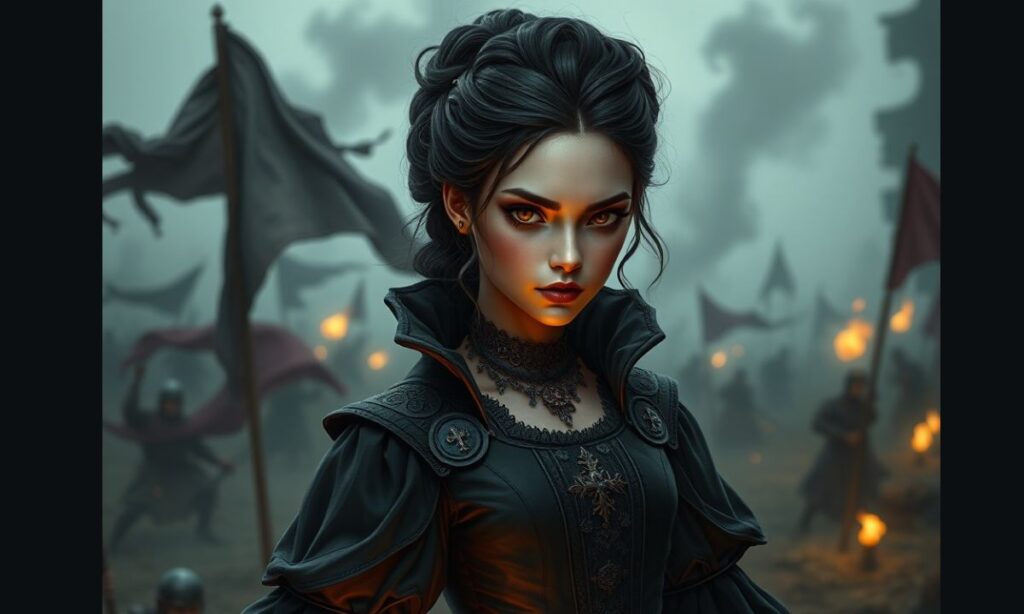
Some names gained evil reputations through historical usage. They weren’t born dark. Events made them that way.
Context transforms innocent names. History proves this repeatedly.
- Pandora – Means “all gifted” but unleashed evil upon humanity
- Cassandra – “Shining upon man” yet cursed to never be believed, causing tragedy through ignored warnings
- Medea – “Cunning” in Greek, murdered her own children for revenge
- Helen – “Bright light” but face launched thousand ships, starting Trojan War
- Cleopatra – “Glory of father” yet political schemes destroyed kingdoms
- Boudica – Celtic queen meaning “victory” who led bloody rebellion
- Agrippina – Roman name associated with multiple empress poisoners
- Messalina – Another Roman name tied to cruelty and excess
- Theodora – Means “gift of God” but Byzantine empress was ruthless
- Wu Zetian – Chinese empress who eliminated rivals mercilessly
- Irene – Means “peace” yet Byzantine empress had son blinded
- Catherine – “Pure” name worn by ruthless rulers like Catherine de Medici
- Mary – “Beloved” yet Mary Tudor earned “Bloody Mary” nickname
- Elizabeth – “God’s promise” but Báthory twisted it into horror
- Margaret – “Pearl” name worn by several cruel historical figures
- Isabella – “Devoted to God” yet Isabella of Castile approved Inquisition
- Anne – “Grace” but Anne Boleyn was accused of witchcraft
- Victoria – “Victory” but Victorian era included harsh social cruelty
- Alexandra – “Defender” yet some royals defended brutal systems
- Beatrice – “She who brings happiness” ironically used for tragic villains
Name evolution studies show meanings shift through historical events. A beautiful name can become ominous through one person’s actions. Cultural memory preserves these associations.
FAQs
What makes a name sound evil or villainous?
Names sound evil through harsh consonants (K, Z, X), dark meanings (death, night, shadow), or historical associations with villains and dark figures.
Can I use these evil names for modern characters?
Absolutely. Evil female names work perfectly for fantasy novels, games, screenplays, and creative projects where powerful, mysterious, or dark characters are needed.
Are evil female names always from mythology?
No. Evil female names come from mythology, history, literature, pop culture, and fantasy creation. Some are ancient, others are modern inventions.
Do these names have real-world usage?
Some do. Names like Lilith and Raven see occasional real-world use. Most extreme villain names remain in fiction and fantasy contexts only.
How do I choose the right evil name for my character?
Match the name to your character’s origin, time period, and personality. Gothic characters need different names than fantasy sorceresses or historical villains.
What’s the difference between dark and evil names?
Dark names suggest mystery and shadows but aren’t necessarily evil. Evil names carry associations with malicious intent, cruelty, or destructive power specifically.
Conclusion
Names shape perceptions instantly. Evil female names carry centuries of power, mystery, and darkness that make characters unforgettable.
Whether writing fantasy novels, designing game characters, or creating film villains, these 200+ names offer endless inspiration. Choose wisely. The right villain name can make your character legendary. Your dark queen, wicked enchantress, or sinister sorceress deserves a name that commands attention and respect.

Jack is a niche writer specializing in creative pet names and wildlife-inspired naming guides. He creates well-researched, easy-to-read content that helps readers discover meaningful and memorable names for their animals.